

Moroccan pouffes and floor cushions are handmade interior products in leather, wool, or vintage rugs, which add warmth, texture, and personality to the home. They are used as seating, footstools, and decorative elements – and fit surprisingly beautifully into Nordic homes with natural materials and calm colours.
Why have Moroccan pouffes and floor cushions become so popular?
There's something special about a home that feels curated over time. Not perfect – but personal. This is where Moroccan pouffes and floor cushions naturally fit in.
They add warmth, softness, and tactility to the decor and act as a counterbalance to the more minimalist Scandinavian lines. I've especially noticed that many people use them to create small, calm zones in the home – around the coffee table, in the summerhouse, or in a reading corner.
At Casa W, we work extensively with products that tell their own story and can be moved around the home according to need and mood. This is precisely why pouffes and floor cushions have become an important part of our universe.
What is the difference between a Moroccan pouffe and a floor cushion?
The terms are often used somewhat interchangeably, but there is typically a difference in shape, height, and material.
| Type | Characteristics | Typical materials | Use |
|---|---|---|---|
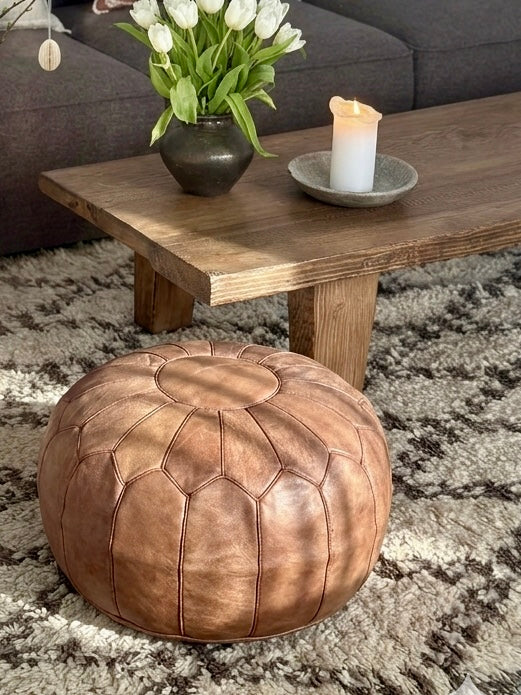
| Moroccan pouffe | Taller and more firm shape | Leather or goatskin | Footstool, extra seating |
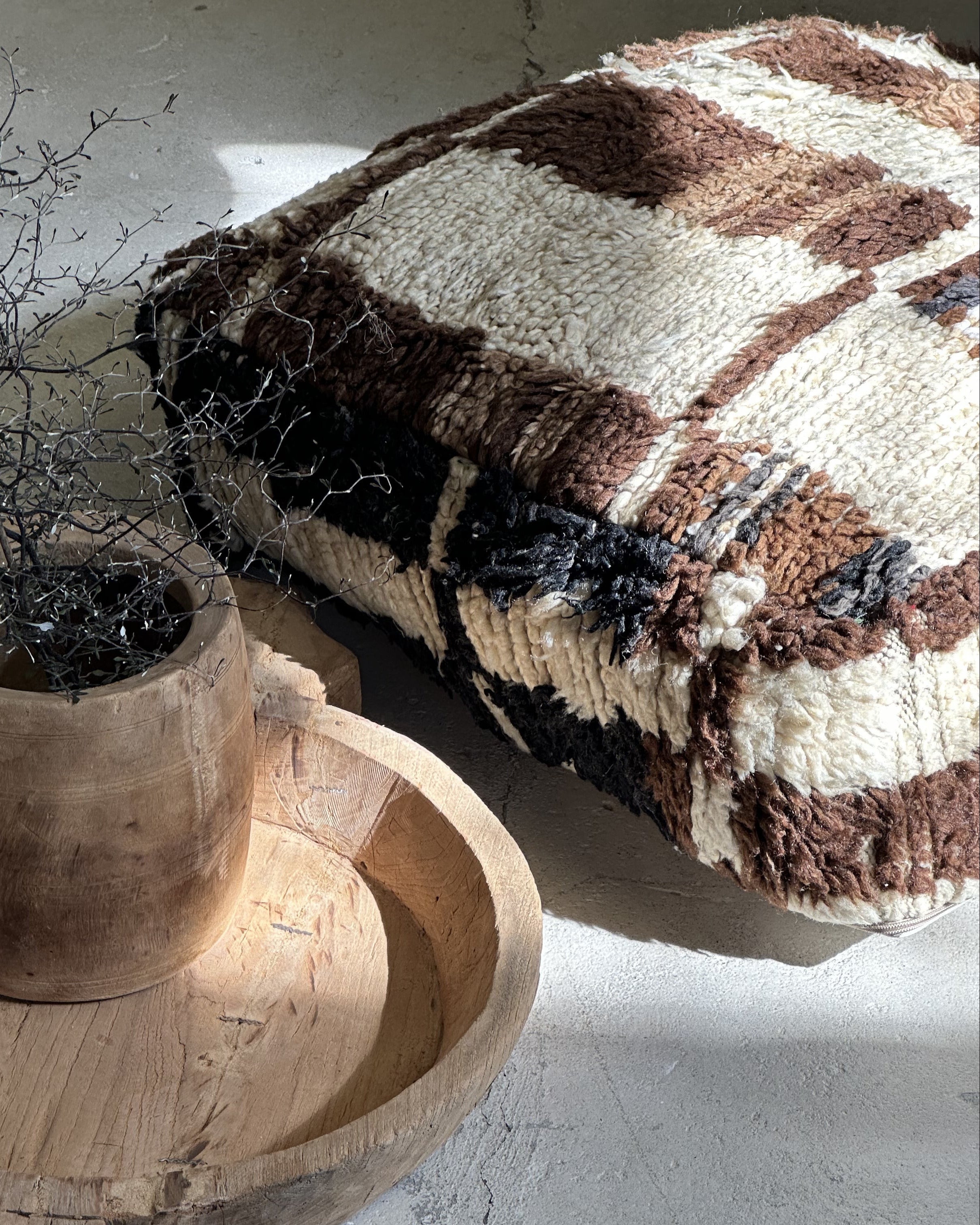
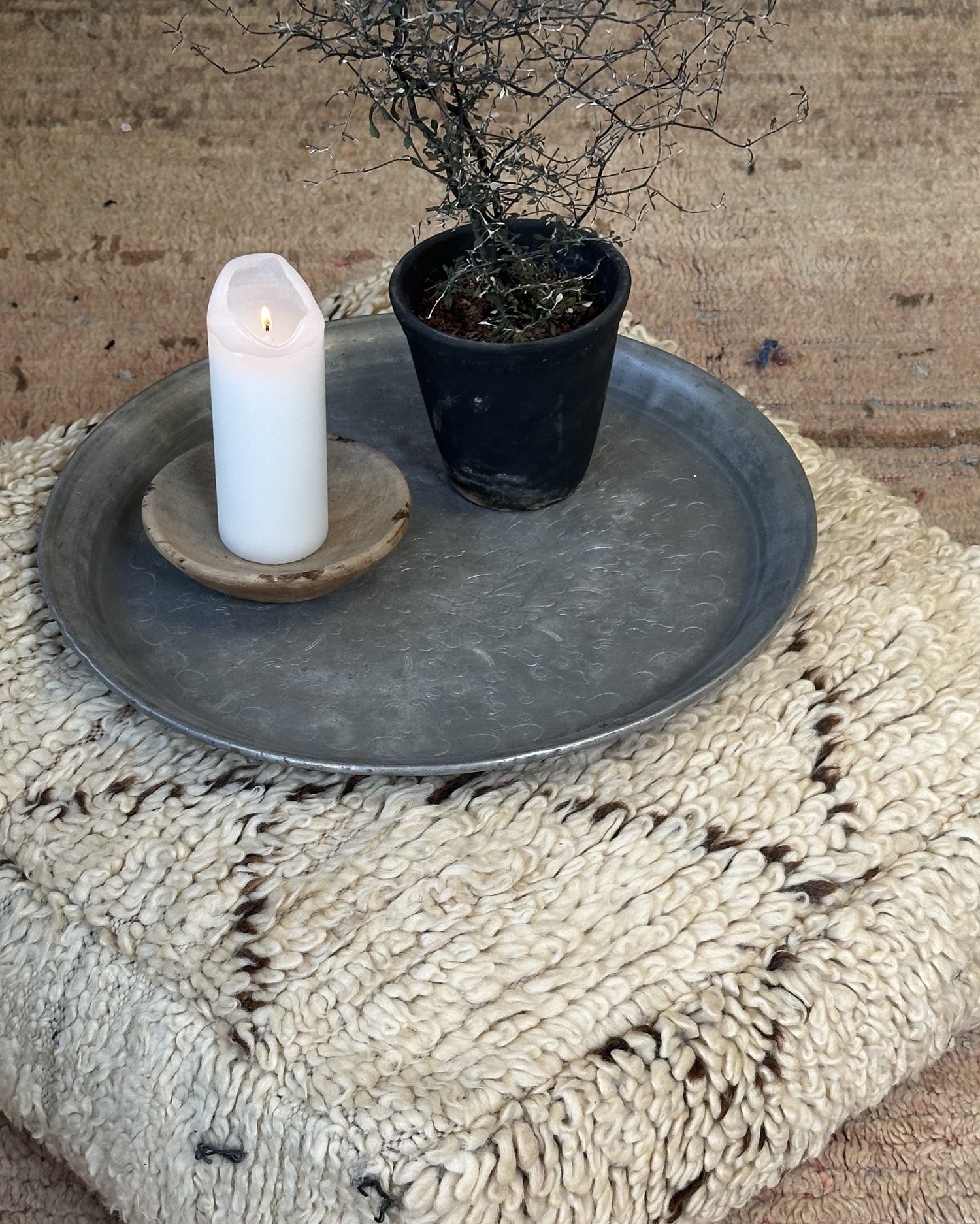
| Floor cushion | Lower and softer | Vintage wool rugs or kilim | Lounge, relaxation, cozy corners |
Classic Moroccan pouffes are often made of leather with decorative stitching, while many floor cushions are sewn from vintage Beni Ourain or Azilal rugs.
What they have in common is that they are flexible furniture that can quickly change the atmosphere in a room.
Materials: leather, wool, and vintage rugs
Leather pouffes in goatskin
The most classic Moroccan pouffes are made of goatskin. The leather is soft, durable, and develops a beautiful patina over time. Many choose the warm cognac colours because they pair well with wood, linen, and natural stone.
The stitching and handmade details are a big part of their charm. No two are exactly alike – and that's precisely what makes them lovely.
Vintage floor cushions in wool
Vintage floor cushions are often made from old Moroccan rugs from the Atlas Mountains. Parts of the rugs are used to create unique floor cushions with structure, patterns, and history.
I especially love the combination of raw wool and a more minimalist Nordic home. It adds depth without feeling overstyled.
Kilim and handwoven textiles
Some floor cushions are sewn from kilim or handwoven textiles with more graphic patterns. They work well if you want a bit more colour or a bohemian feel in your decor.
How to style Moroccan floor cushions in Nordic homes
The most important thing is not actually the pouffe itself – but the context around it.
I almost always work with the following elements:
- Soft textiles like linen, wool, and cotton
- Wood, marble, or ceramics as a contrast
- Muted earth tones
- Natural light and shadows
- Products with visible texture
A Moroccan floor cushion works beautifully:
- Next to a sofa with linen cushions
- In front of a fireplace in the summerhouse
- As extra seating around the coffee table
- In a lounge corner with rugs and lamps
- Together with vintage ceramics and baskets
At Casa W, we work a lot with showcasing products in environments rather than alone. This makes it easier to imagine how they fit into a home.
What filling is used in a Moroccan pouffe?
Many Moroccan pouffes are delivered without filling, so you can choose the firmness and look yourself.
You can use, among other things:
- Old duvets and pillows
- Foam granulate
- Fabric scraps
- Wood wool
- Rolled-up bedding
If you want a firmer look, the pouffe should be well filled. For floor cushions, many prefer a slightly softer and more relaxed look.
How do you maintain Moroccan pouffes and floor cushions?
It depends on the material.
Leather
Leather pouffes benefit from dry wiping and occasional leather care. Avoid direct sunlight for extended periods.
Wool and vintage textiles
Vintage wool floor cushions should be treated like a rug:
- Vacuum gently
- Dab stains with a damp cloth
- Avoid harsh cleaning
- Air them regularly
Precisely because they are handmade and made of natural materials, they will develop beautifully over time.
Moroccan pouffes are perfect for “collected interiors”
I think many people are tired of homes that feel too perfect or mass-produced.
That's also why I personally love products with craftsmanship, texture, and small variations. Moroccan pouffes and floor cushions fit perfectly into this way of decorating, where the home is allowed to evolve over time.
At Casa W, we work extensively with the feeling of “crafted objects” and “collected interiors”. Products that don't just fill a room – but provide atmosphere and warmth.
It's not about furnishing the entire home at once. But about finding objects you want to live with for a long time.
Our selection of Moroccan pouffes and floor cushions
At Casa W, you will find both classic leather pouffes and vintage wool floor cushions. Many of them are hand-picked in Morocco and made from vintage textiles or goatskin.
See, for example:
- All Moroccan pouffes and floor cushions
- Moroccan pouffe – light brown
- Moroccan pouffe – brown with stitching
Moroccan pouffes are also among the product categories that generate the most repeat purchases and loyalty at Casa W.
Frequently asked questions
What is a Moroccan pouffe?
A Moroccan pouffe is a handmade seating cushion or footstool – typically made of leather, wool, or vintage rugs from Morocco.
How do you fill a Moroccan pouffe?
You can use duvets, pillows, textiles, foam granulate, or wood wool depending on how firm you want the pouffe.
Can Moroccan floor cushions be used in Nordic homes?
Yes. They work particularly well with natural materials, wood, linen, and calm earth tones.
Are Moroccan pouffes handmade?
Yes, most authentic Moroccan pouffes and floor cushions are handmade and have small variations that make each product unique.
How do you clean a vintage floor cushion?
Vacuum gently and dab any stains with a well-wrung cloth. Avoid harsh washing and machine washing.



Leave a comment
This site is protected by hCaptcha and the hCaptcha Privacy Policy and Terms of Service apply.