

Tamegroute pottery is handmade Moroccan pottery known for its distinctive green glaze, organic shapes, and rustic finish. The pottery is still produced according to ancient craft traditions in southern Morocco, where variations in glaze, shape, and texture are part of what makes each piece unique.
What is Tamegroute pottery?
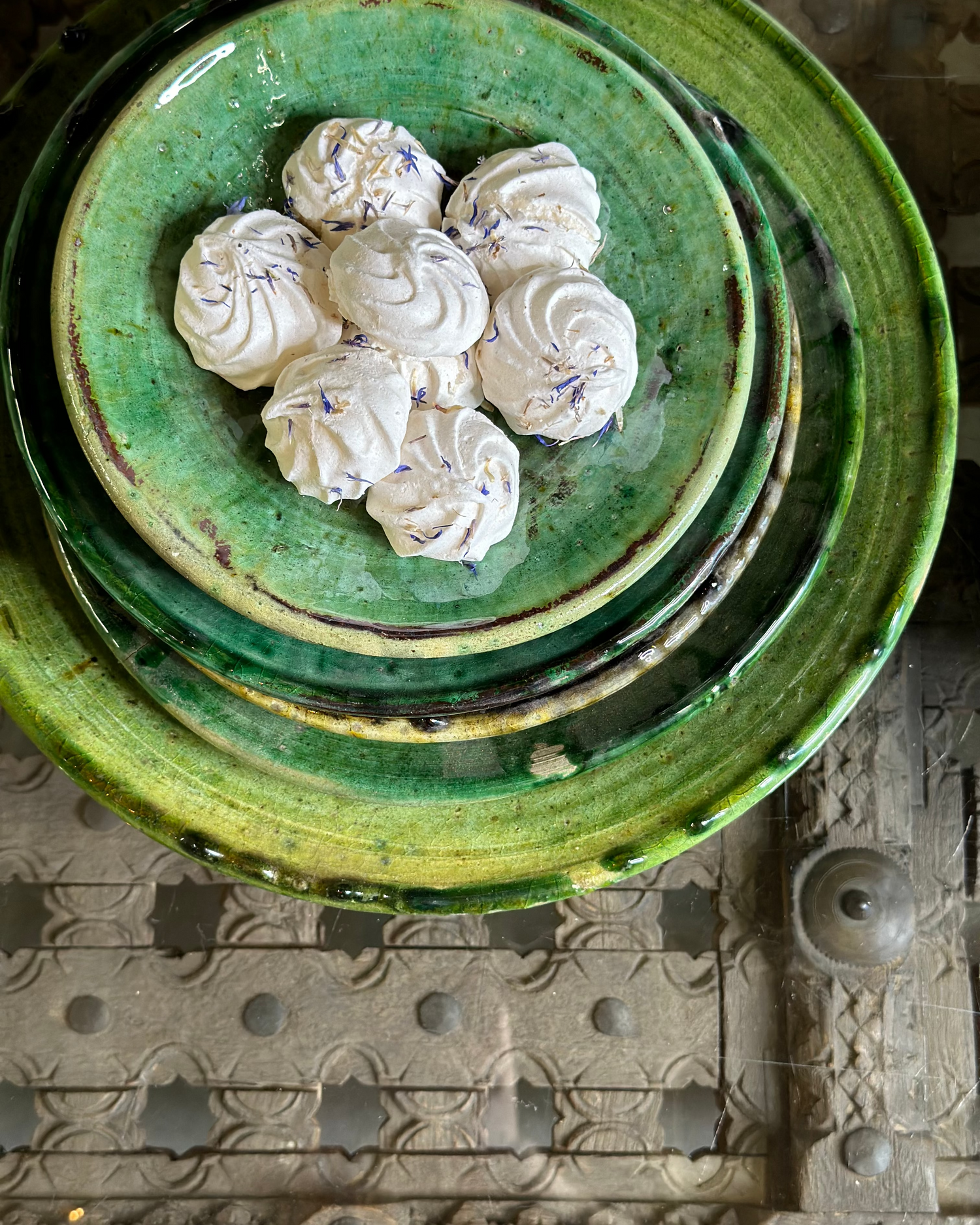
Tamegroute pottery is a special type of Moroccan pottery that originates from the village of Tamegroute in southern Morocco, near the Sahara Desert. The pottery is particularly known for its deep green hues, but also comes in darker or golden tones depending on the glazing and firing process.
What makes Tamegroute so sought after is its vibrant and imperfect expression. No bowls, dishes, or candle holders are exactly alike. The glaze flows differently during firing, edges become organic, and small irregularities are a natural part of the craftsmanship.
For me, that's exactly what makes Tamegroute so wonderful in a Nordic home. It adds warmth, tactility, and personality to an interior that can otherwise quickly become very stark and uniform.
Where does Tamegroute pottery come from?
Tamegroute pottery is produced in the town of Tamegroute, south of Marrakech. The area has been known for centuries for its ceramic traditions, where local artisans work with clay, natural pigments, and traditional kilns.
Production is still relatively small-scale and handcrafted compared to industrial ceramics. Many workshops continue to use techniques passed down through generations.
I started sourcing in Marrakech myself during the Corona period, looking for crafts and products with the same authenticity and material focus I had previously experienced in Asia. Tamegroute pottery quickly became one of the product categories I returned to again and again.
Why is Tamegroute pottery green?
The iconic green color arises through the special glazing and firing process. Traditionally, natural minerals and oxides are used, which react differently during firing.
The result is the characteristic vibrant surface, where the color can vary from:
- Deep olive-green hues
- Light moss green
- Dark green with almost black areas
- Golden or brown undertones
It is precisely these variations that make Moroccan Tamegroute pottery so interesting. The glaze is alive and changes from product to product.
Why is Tamegroute pottery uneven?
If you are used to perfectly factory-produced ceramics, Tamegroute might seem rough or asymmetrical at first glance. But that is actually a big part of its charm.
The craftsmanship is characterized by:
- Hand-shaped edges
- Small variations in height and form
- Living glaze
- Small marks and textures from firing
- Organic forms without perfection
No Tamegroute bowls or dishes are identical. It is precisely the opposite of mass production – and therefore they fit so beautifully into homes where one desires more personality and fewer standard solutions.
How to use Tamegroute pottery in your decor
Tamegroute works surprisingly well in Scandinavian homes because it creates a contrast to light walls, wood, linen, and more calm materials.
I particularly find that customers use the pottery to create small still lifes and warmth in rooms that might otherwise lack texture and atmosphere.
Tamegroute in the kitchen
A large Tamegroute bowl can be used for salads, fruit, or simply stand on display as a decorative object.
For example, see our Tamegroute bowl – 30 cm., which is among our most popular products. :contentReference[oaicite:2]{index=2}
Tamegroute on the dining table
A large platter or several smaller bowls give the table setting a more relaxed and sensory expression. The pottery pairs particularly beautifully with:
- Linen tablecloths
- Wood
- Brass
- Natural stone
- Linen napkins
You can also combine several shades and sizes for a more collected look.
Tamegroute in the living room
Many also use Tamegroute purely as decoration. A candlestick or bowl on a coffee table adds depth and material variation.
Our Tamegroute candlestick and Tamegroute bowl on a stand, for example, work very well in small still lifes.
How to clean Tamegroute pottery?
Since Tamegroute pottery is handmade and more porous than industrial ceramics, I always recommend a little extra caution.
- Preferably handwash
- Avoid large temperature changes
- Do not leave pottery in water for a long time
- Use mild cleaning agents
- Avoid harsh scrubbing brushes
Small crazing and variations in the glaze are normal and part of the authentic expression.
Can Tamegroute pottery withstand water?
Yes – many types of Tamegroute pottery can be used for both food and water. But because the pottery is handmade and porous, some products will be more decorative than practical for daily use.
I always recommend viewing Tamegroute as both functional and decorative craftsmanship. These are products that tell their own story and become more beautiful with the rest of the home over time.
Why has Tamegroute pottery become so popular?
The interest in handmade Moroccan pottery is closely linked to the growing interest in slow living, natural materials, and more personal homes.
Many want fewer, but more unique objects in their home. Tamegroute fits perfectly here because each piece feels tangible and alive.
At Casa W, we generally work a lot with crafted objects and collected interiors – products with materiality, history, and personality rather than fast trends.
How to choose the right Tamegroute pottery
When choosing Tamegroute, it's less about perfection and more about atmosphere.
Consider:
- Whether you want dark or lighter green shades
- Whether the product should be decorative or functional
- How it interacts with your other materials
- Whether you want a calm or more rustic expression
I often recommend starting with one larger bowl or platter, which can be allowed to stand on display and create peace and warmth in the room.
See our full selection of Tamegroute pottery and experience the many unique variations.
Frequently Asked Questions
What is Tamegroute pottery?
Tamegroute pottery is handmade Moroccan pottery known for its green glaze, organic shapes, and traditional craftsmanship.
Where does Tamegroute pottery come from?
The pottery originates from the town of Tamegroute in southern Morocco, near the Sahara Desert.
Why is Tamegroute pottery uneven?
Because it is handmade. Variations in shape, glaze, and surface are a natural part of the craftsmanship.
Can Tamegroute pottery withstand water?
Yes, many products can be used functionally, but they should be treated more gently than industrial ceramics.
How do you clean Tamegroute pottery?
It is recommended to handwash Tamegroute pottery with mild cleaning agents and avoid large temperature changes.



Leave a comment
This site is protected by hCaptcha and the hCaptcha Privacy Policy and Terms of Service apply.