

Tie-dye clothing from Bali is hand-dyed apparel inspired by traditional batik and tie-dye techniques, where each piece gets its own unique pattern. The soft materials, relaxed silhouettes, and vibrant colors make tie-dye kaftans and dresses from Bali popular for holidays, cottage life, and a more personal wardrobe.
Why has tie-dye clothing from Bali become so popular?
There's something special about hand-dyed clothing from Bali. The colors feel vibrant, the materials are light and relaxed, and no two styles are exactly alike. It is precisely this combination that makes tie-dye clothing from Bali popular among women who want something more personal and less mass-produced.
In Bali, many small workshops still work with traditional dyeing techniques, where textiles are folded, tied, and hand-dyed layer by layer. The result is organic patterns with variation and depth. The tradition is closely related to other Asian resist-dye techniques such as batik and shibori.
For many years, I have worked with local suppliers in Asia, including Bali, where I use smaller sewing workshops for selected collections of lounge wear and tie-dye kaftans. The human process can be seen in the finished product – and that is exactly what I love about hand-picked products with history.
What is tie-dye?
Tie-dye is a dyeing technique where the fabric is folded, twisted, or tied before dyeing. The bound areas absorb the color differently, creating characteristic patterns and color plays. The technique is found in many cultures and has roots in India, Japan, and Indonesia.
In Indonesia, the technique is closely associated with local textile traditions and craftsmanship. In Bali, you often see softer and more organic color transitions than the classic 70s-inspired tie-dye.
What characterizes tie-dye kaftans and dresses from Bali?
Most people probably associate tie-dye with colorful T-shirts, but in Bali, the technique is often used on more elegant and relaxed silhouettes.
- Airy kaftans and dresses in viscose or rayon
- Soft color transitions and handmade variations
- Relaxed fits with a bohemian look
- Comfortable materials for warm days
- Small productions rather than mass production
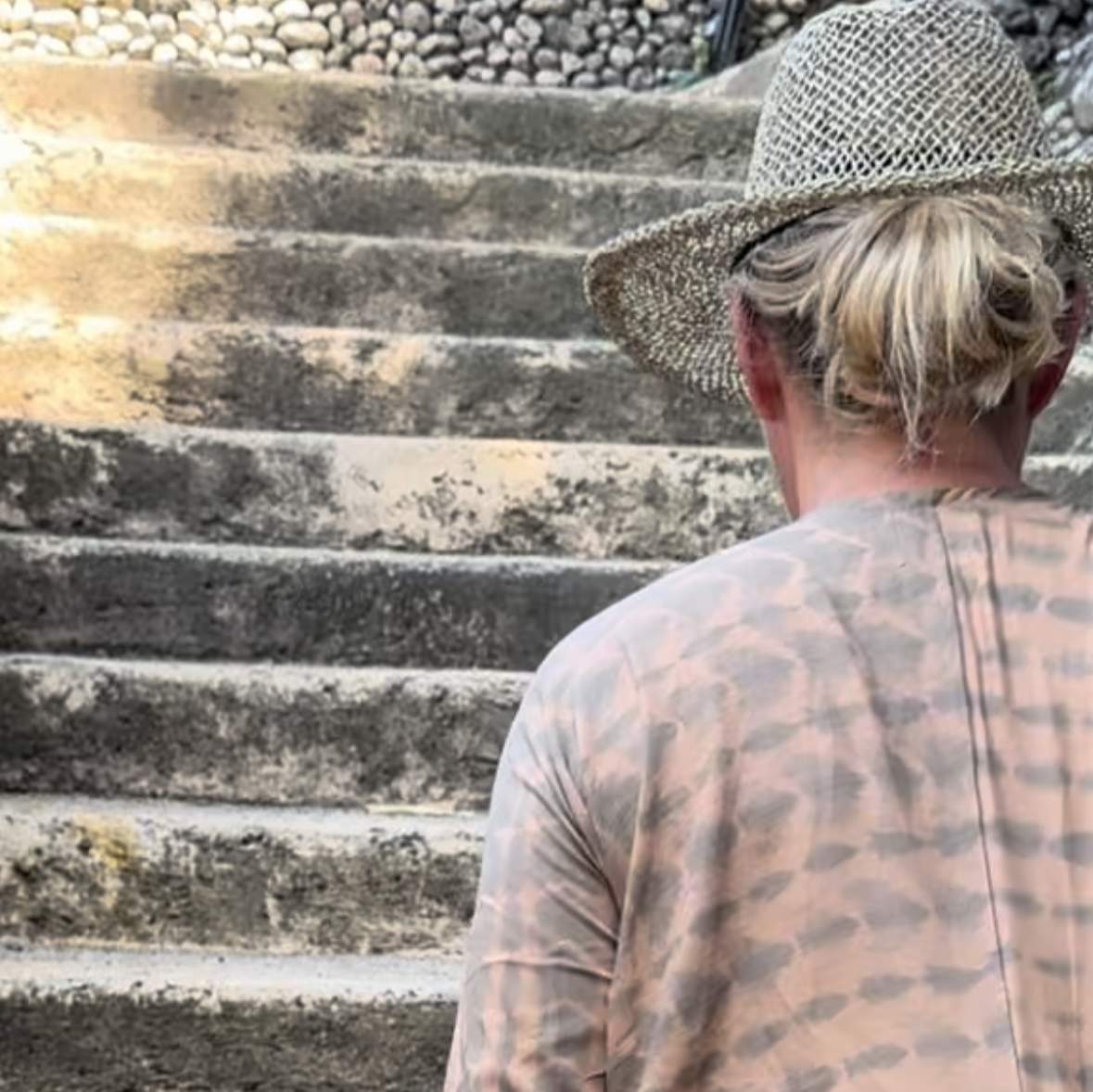
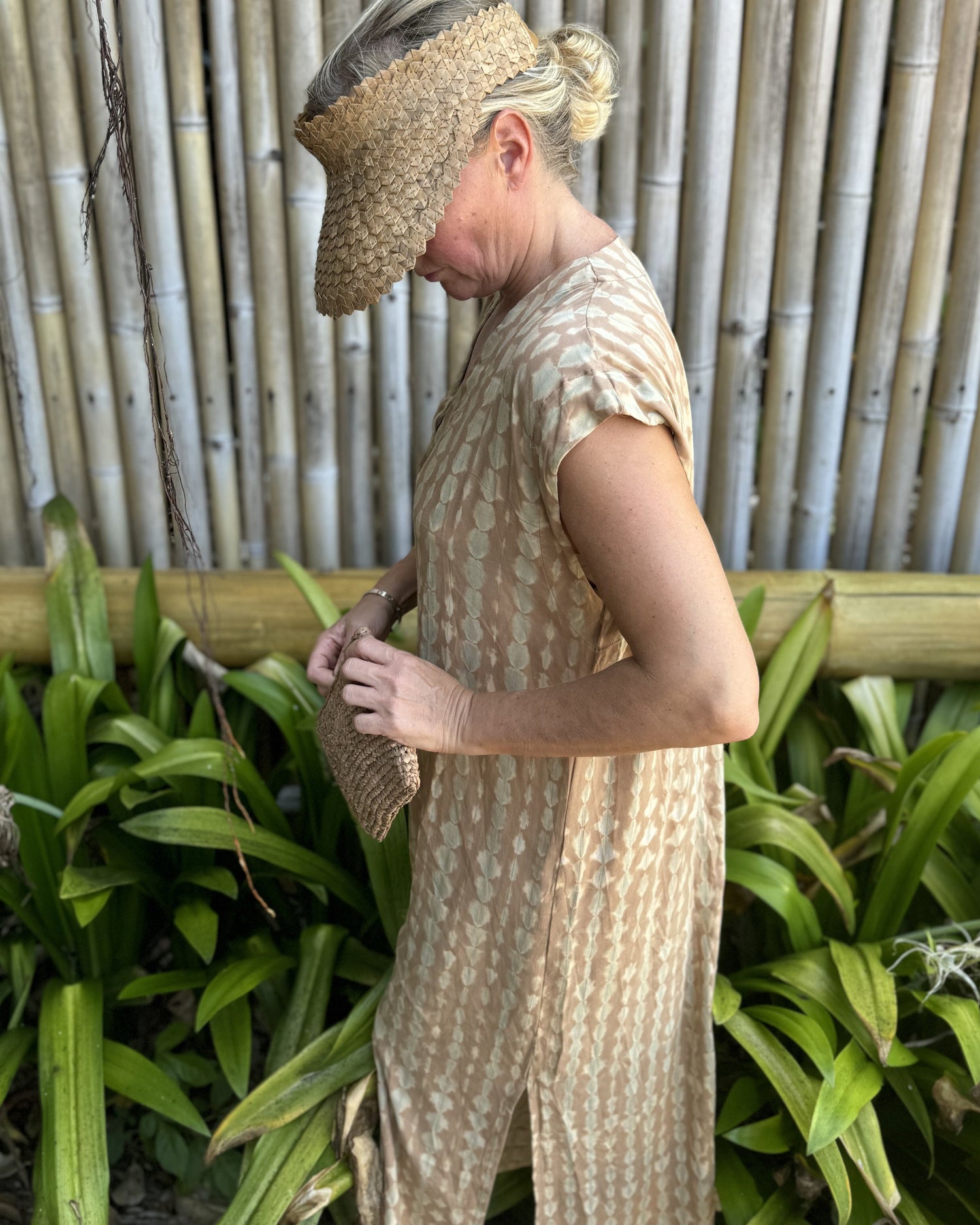
At Casa W, we especially work with styles that feel calm and usable in a Scandinavian wardrobe. Tie-dye doesn't have to be screaming colors. On the contrary, muted earth tones, gray shades, and warm sand colors work incredibly beautifully with natural materials and a more simple expression.
Our tie-dye kaftan and tie-dye dress in gray/orange are among the products that customers return to, especially during the summer months.
How I style tie-dye clothing from Bali
The beauty of tie-dye is that it can be both relaxed and elegant. I often use tie-dye kaftans in three different ways:
- On holiday: with sandals, large sunglasses, and a woven bag.
- At the cottage: layered with knitwear, bare feet, and natural materials.
- In everyday life: with simple sandals or sneakers and minimal accessories.
It's often about balance. When the pattern is allowed to dominate, it works well with calm accessories and natural materials such as leather, wood, and raffia.
Is tie-dye clothing handmade?
Many of the most beautiful tie-dye styles from Bali are still hand-dyed in smaller workshops. This also means that there can be small variations in both color and pattern.
These are not flaws – they are part of the craftsmanship.
When textiles are dyed by hand, the fabric reacts differently every time. Therefore, you get a piece of clothing that tells its own story and doesn't look like everything else.
At several Balinese brands and workshops, traditional hand-dyeing methods are still practiced by local dye artists.
That's why tie-dye fits perfectly with slow living
I find that many women today want fewer, but more personal items in their wardrobe. Not necessarily trends – but clothes that feel right over time.
This aligns very well with the whole slow living philosophy, where materials, atmosphere, and authenticity matter more than fast trends. It is also a development we see clearly in the home and lifestyle world in general.
Tie-dye clothing from Bali works well with this mindset because it feels more human and less perfect. It is clothing with texture, craftsmanship, and personality.
How to choose good quality tie-dye clothing?
There is a big difference between hand-dyed tie-dye and cheap printed fast fashion. I would particularly look for:
| Detail | What to look for |
|---|---|
| Material | Viscose, rayon, cotton or silk with a soft drape |
| Color play | Organic transitions rather than very sharp prints |
| Variation | Small differences between styles indicate handcraft |
| Fit | Loose silhouettes that drape beautifully |
| Production | Smaller productions and hand-dyed processes |
It's not about perfection, but about the feeling of something genuine and hand-picked.
Frequently asked questions
What is tie-dye clothing?
Tie-dye clothing refers to textiles that are hand-dyed using folding, tying, or twisting patterns to create unique color effects in the fabric.
Where does tie-dye come from?
Tie-dye techniques are found in many cultures, including India, Japan, and Indonesia. In Bali, the technique is often used on kaftans, dresses, and light summer textiles.
Is all tie-dye clothing handmade?
No. Some tie-dye is industrially printed, while other pieces are hand-dyed in smaller workshops. Hand-dyed styles typically have more variation and depth in the pattern.
How do you wash tie-dye clothing?
I recommend gentle washing at low temperatures and with mild detergent. This helps preserve the colors longer.
How do you style tie-dye clothing?
Tie-dye works beautifully with neutral accessories and natural materials. A loose kaftan can be styled for holidays, cottage stays, and casual everyday wear.



Leave a comment
This site is protected by hCaptcha and the hCaptcha Privacy Policy and Terms of Service apply.