

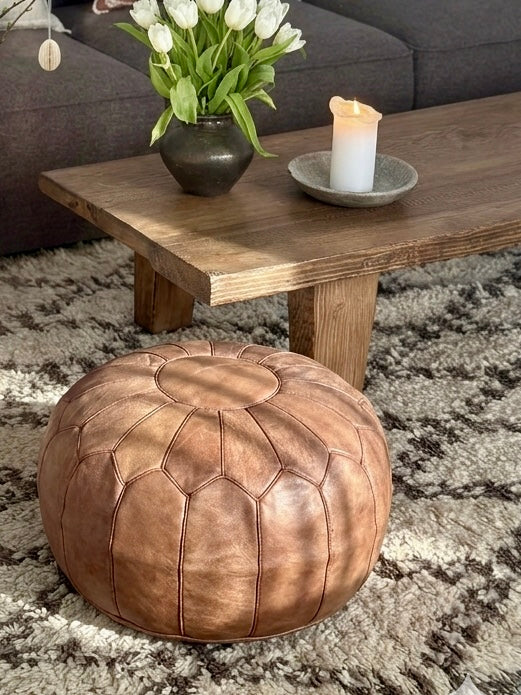
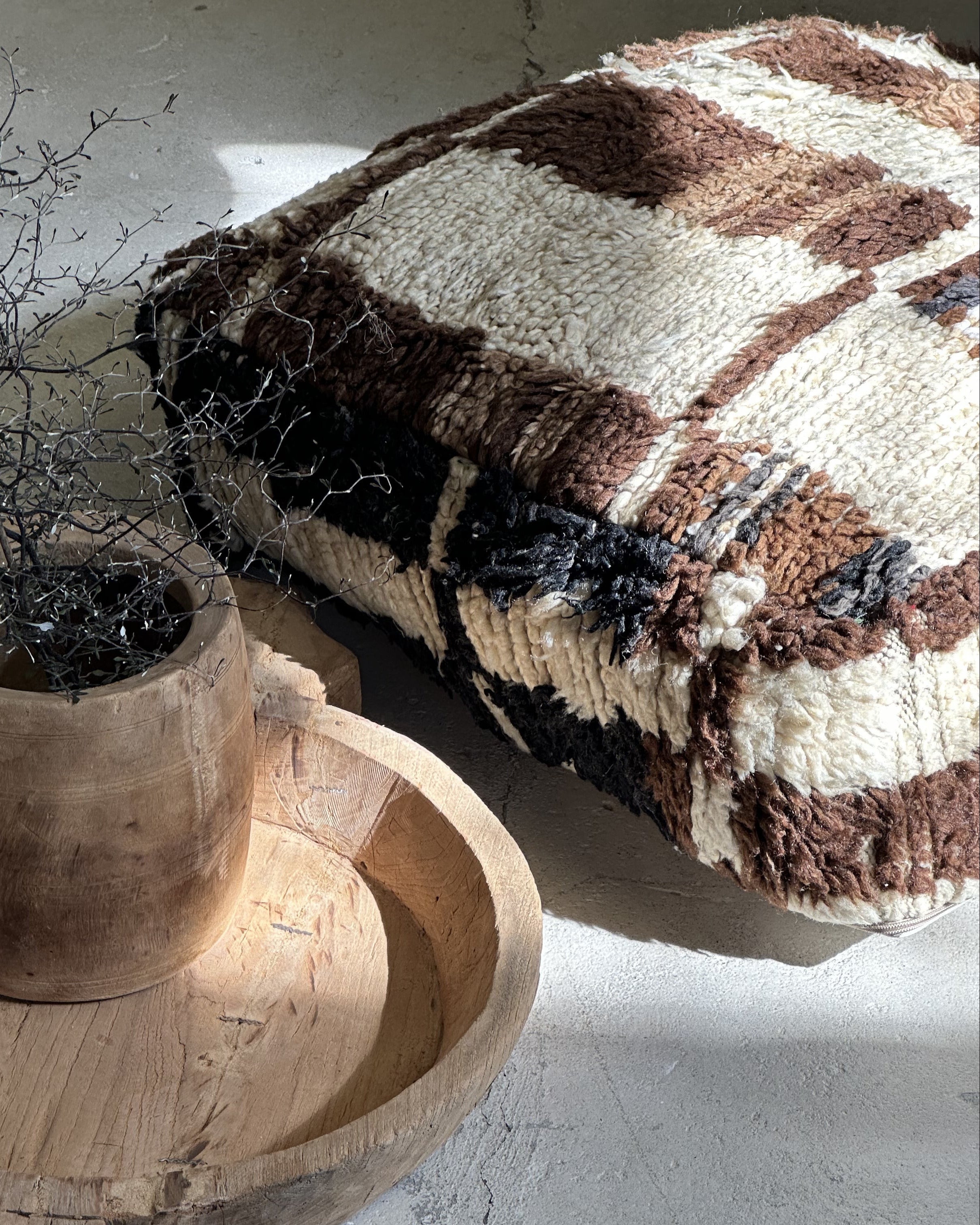
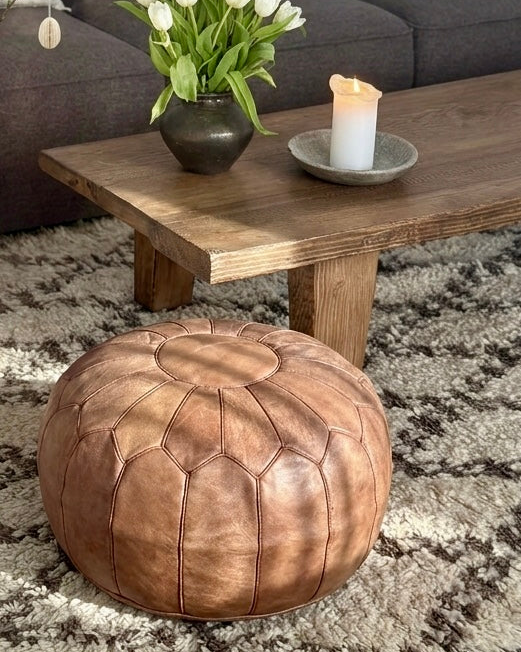
A Moroccan cushion is typically a handmade cushion or pouf from Morocco, made of leather or textile and often decorated with stitching or embroidery. It is used as a seat, a footstool, and a decorative detail in the home, and is known for its unique craftsmanship and warm expression.
What is a Moroccan cushion?
Moroccan cushion is a broad term, often used for both Moroccan floor cushions and the classic leather poufs from Morocco. The products are known for their handmade details, natural materials, and ability to create warmth and personality in the decor.
Today, the term is primarily used for the round or square leather poufs, which have been a part of Moroccan homes for many years. They function as both furniture and decoration and fit surprisingly well into Scandinavian homes.
What is the difference between a Moroccan cushion and a Moroccan pouf?
The terms are often used synonymously, but there are some differences.
| Moroccan Cushion | Moroccan Pouf |
|---|---|
| Can be a soft floor cushion or a decorative cushion | Typically has a firm shape and is used as furniture |
| Textile, cactus silk, or cotton | Leather is the most common material |
| Primarily comfort and decoration | Seating, footstool, and decoration |
At Casa W, the most popular models are the handmade leather poufs from Morocco, which are also among the store's best-selling products. :contentReference[oaicite:1]{index=1}
Why have Moroccan cushions become so popular?
The interest in Moroccan home decor is closely linked to the desire for more personality, tactile materials, and soulful homes. Many homeowners today seek fewer, but more characterful objects that can tell their own story. This also aligns with the trends shaping the market for curated interiors and slow decoration. :contentReference[oaicite:2]{index=2}
A Moroccan cushion adds:
- Warmth and texture
- Craftsmanship details
- Natural materials
- A relaxed and inviting expression
- A unique element to the decor
It is precisely the combination of function and narrative that makes the Moroccan cushion a popular choice.
Materials and craftsmanship
Moroccan cushions are traditionally made from materials found locally in Morocco. The most common are:
- Leather
- Wool
- Cotton
- Cactus silk
When I visit Marrakech to find new products for Casa W, it is precisely the craftsmanship and materials that I spend the most time evaluating. Small variations in stitching, texture, and finish are often what make a product special.
Moroccan products are rarely identical. It is part of the charm of handmade products and a sign that they do not come from mass production.
How to use a Moroccan cushion in your decor
A Moroccan cushion can be used in many different rooms.
In the living room
Use it as extra seating by the coffee table or as a footstool by an armchair.
In the summer house
Moroccan cushions are particularly well-suited for summer houses, where the decor is often more relaxed and sensory. Here, they serve as a natural complement to wood, linen, wool, and other natural materials. :contentReference[oaicite:3]{index=3}
In the bedroom
Place a pouf by the headboard or as a decorative element next to the bed.
In the hallway
A Moroccan cushion can serve as a practical seat when putting on and taking off shoes.
How to choose the right Moroccan cushion?
Consider the following before buying:
- Should it be used as a seat or decoration?
- Do you prefer leather or textile?
- Does the color match the rest of the decor?
- Do you want a neutral or more striking expression?
- Do you have space for a larger pouf or would a smaller model be better?
If you want a classic look, warm shades like cognac, sand, and brown are often safe choices.
See also our Moroccan cushion/pouf in light brown and Moroccan cushion with stitching, both of which are among Casa W's most popular products. :contentReference[oaicite:4]{index=4}
What do you fill a Moroccan cushion with?
It depends on the model. Many Moroccan leather poufs are delivered without filling, so you can adjust the firmness yourself.
Typical filling materials are:
- Cushions
- Blankets
- Textile scraps
- Foam granules
- Wood wool
The advantage is that you can decide whether the pouf should be soft and relaxed or firmer and more stable.
Is a Moroccan cushion still modern?
Yes. In fact, the Moroccan cushion fits well with several of the home trends we see today. Focus on craftsmanship, natural materials, slow living, and homes with personality means that Moroccan products remain relevant. :contentReference[oaicite:5]{index=5}
A Moroccan cushion works best as an object that has been collected for the home over time – not as a quick trend.
This is precisely why it continues to find its place in modern homes, summer houses, and more classic homes alike.
Frequently Asked Questions
What is a Moroccan cushion?
A Moroccan cushion is a handmade cushion or pouf from Morocco, often made of leather or textile and used as both decoration and seating.
What is a Moroccan cushion used for?
It is used as an extra seat, a footstool, or a decorative detail in the living room, bedroom, or summer house.
Are Moroccan cushions handmade?
Many Moroccan cushions are still handmade and therefore have small variations that make each model unique.
How do you fill a Moroccan pouf?
You can use cushions, blankets, textiles, foam granules, or other soft filling depending on the desired firmness.
Do Moroccan cushions suit Scandinavian decor?
Yes. The natural materials and warm shades work particularly well with Nordic decor.



Leave a comment
This site is protected by hCaptcha and the hCaptcha Privacy Policy and Terms of Service apply.